
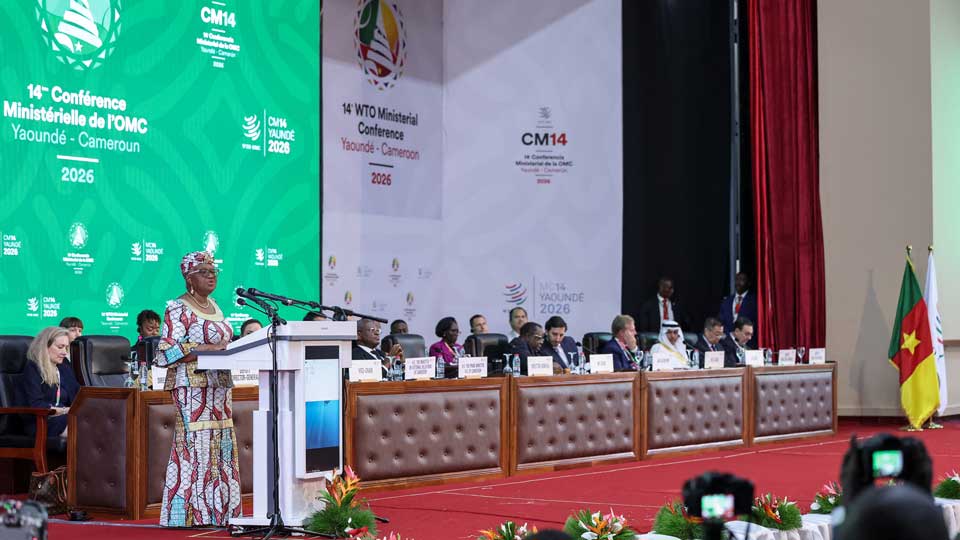
The World Trade Organization (WTO) Director-General Ngozi Okonjo-Iweala speaks during the WTO ministerial conference in Yaounde on March 26, 2026. (Photo by AFP)
Trade ministers failed to extend the long-standing WTO moratorium on customs duties for cross-border digital transmissions, dealing a setback to developed economies, particularly the United States. World Trade Organization Director-General Ngozi Okonjo-Iweala acknowledged the intense effort, as four days of negotiations in Yaoundé ended without consensus.
A tentative reform deal collapsed after Brazil blocked agreement on the e-commerce moratorium, citing stalled progress in agriculture talks—an issue that remains highly sensitive among the WTO’s 166 members. Despite low expectations, ministers had hoped to outline a roadmap for future negotiations amid rising trade tensions and global economic uncertainty.
The moratorium, in place since 1998, expired without renewal after divisions between developed and developing countries, including India, over potential revenue losses. While the United States pushed for permanence, compromise efforts fell short. Its lapse does not immediately impose tariffs, as countries may still choose to maintain duty-free digital trade individually.